
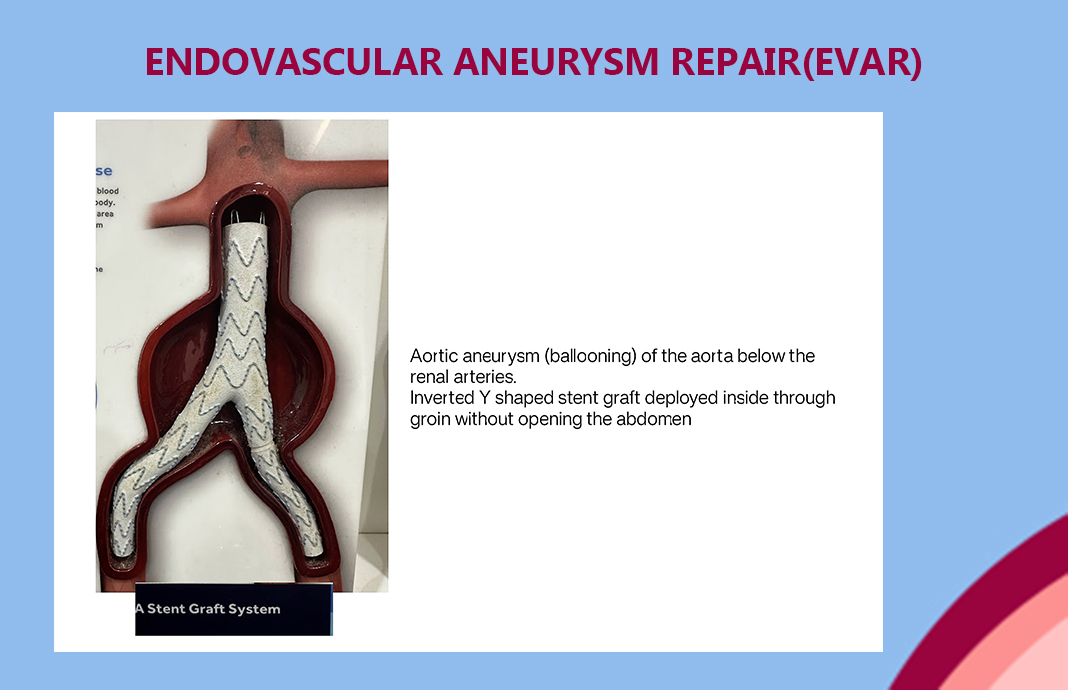
There is another technique for repairing an aortic aneurysm that can be used for patients who are at too high of a risk to undergo major surgery. This is a minimally invasive procedure which involves placing a device called a "stent graft" inside the diseased portion of the aorta without opening the abdomen or chest. The stent is placed inside the aorta through a catheter that is put through an artery leading to the aorta usually from the groin. Thus the blood will flow through the graft and the blood trapped between the graft and the aneurysm wall gets clotted. This will relieve the pressure on the wall due to the blood flowing through the aneurysm, preventing rupture.
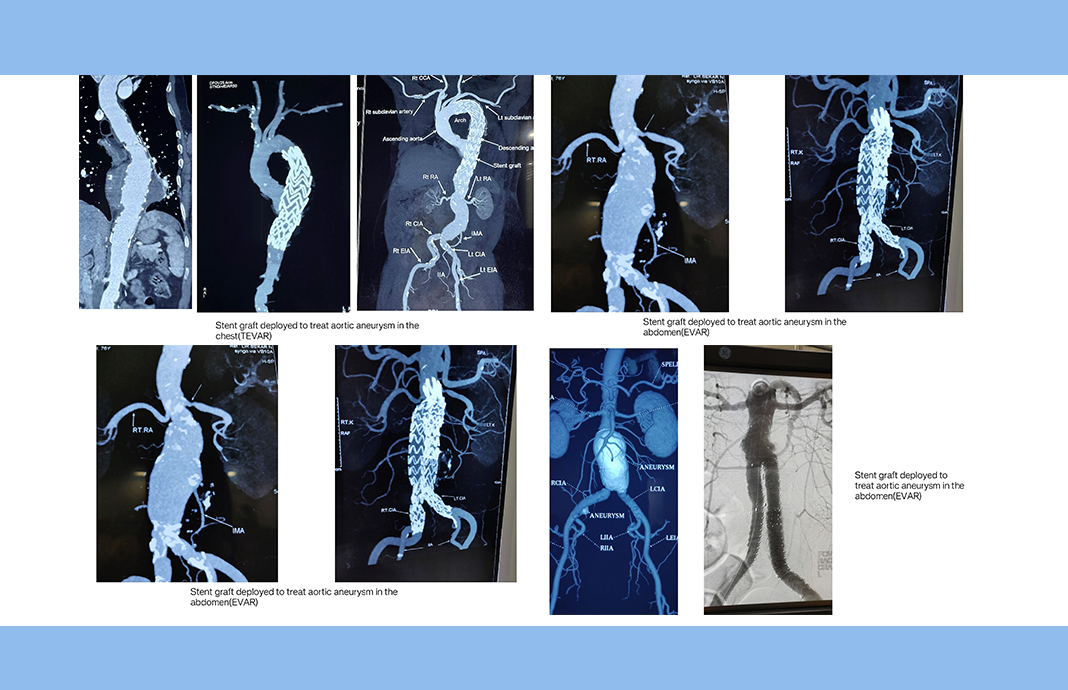
This procedure has less risks to life and the patient can recover faster. However, the patient has to come for regular follow ups to check whether the graft is in the correct place and has not moved. Since there are no fixing sutures there is a likelihood of graft loosening leading to endoleak which will need further procedures to correct the leak. Some cases may not be suitable for simple endovascular repair because of anatomical restraints and they would need either endovascular graft with side branches (FEVAR) of open surgical repair
