How is DVT diagnosed?
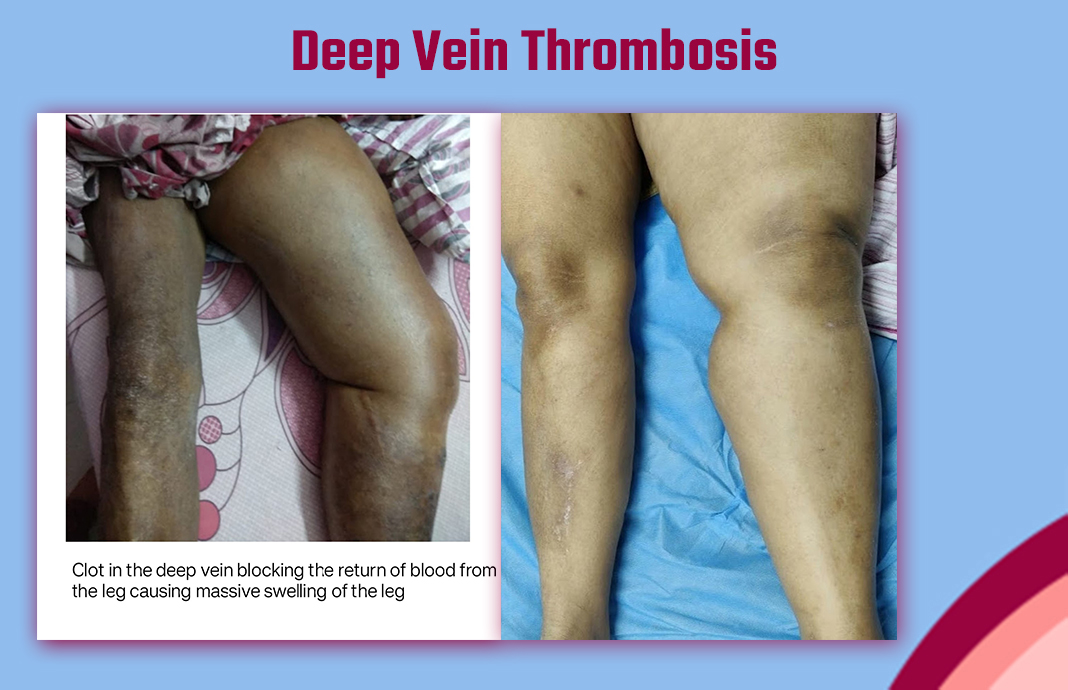
- Clinically – Thinking of the possibility of DVT in risk groups. DVT must be ruled out if
leg swelling develops in the risk group
- Doppler ultrasound examination of the limb-A simple non- invasive test
- ECHO to check the heart function.
/CT angiogram lungs are needed to diagnose pulmonary embolism
How is DVT treated?
The aim of the treatment is to dissolve the clots and to prevent pulmonary embolism
Usually a drug that prevents clotting- heparin or its substitutes are injected. Later it is
substituted with an oral anti- clotting tablet. The medicines will have to be taken for 3- 6
months depending on the extent of the clot.. Compression bandage or stockings also should
be worn to reduce the swelling. In some patients if there is risk to life in the form of
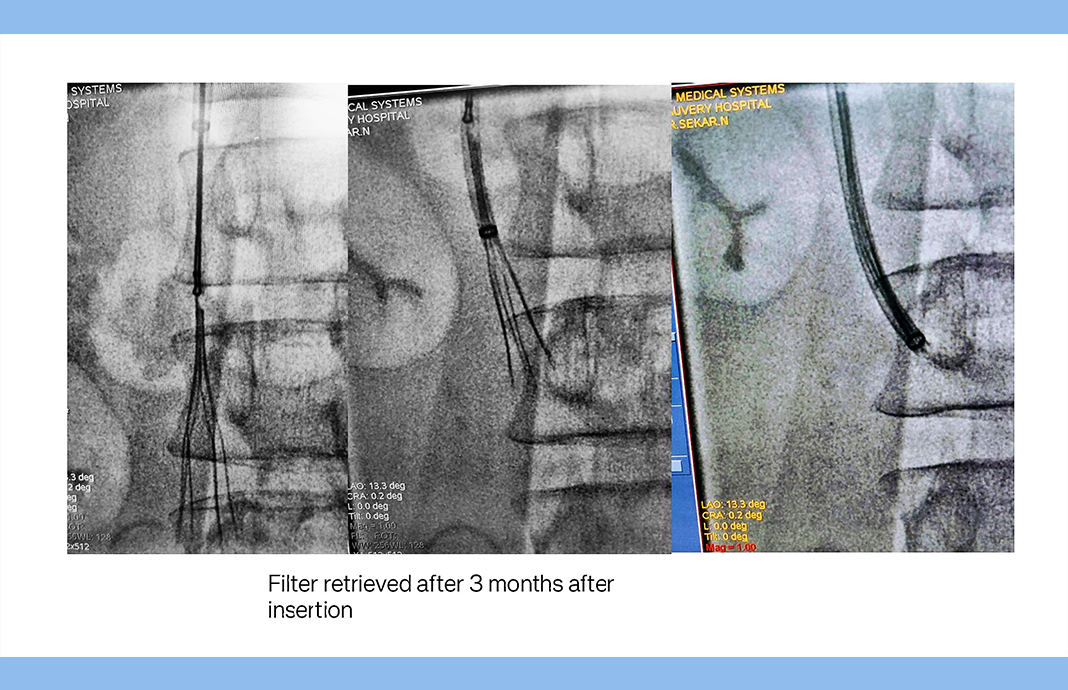
pulmonary embolism, a wire mesh filter (Vena caval filter) can be inserted into the bigger
vein in abdomen to prevent the clot from moving to the heart. This filter can be removed once
the risk of pulmonary embolism is reduced -usually after 2-3 months
Recent advances:
Clot in the vein can be sucked out and the residual clot can be dissolved quickly by inserting
a tube into the vein and giving a strong clot dissolving medicine (Thrombolytic drug) over 24
hours. This is followed by continuing the regular anti- clotting medicine for 6- 12 months
More effective clot dissolution is achieved by this method and long- term complications are
also reduced
Preventive steps in DVT
- Early mobilization after surgery
- Avoid immobility for long hours. If the work demands sitting for a long time, get up
and walk every hour or so. Frequent pedaling action of the foot also prevents blood
stagnation
- Talk to your doctor about preventing DVT if you are going to undergo a major
surgery. Anti- clotting injection (Heparin or its substitutes) can be given to prevent
clot from developing.
- Stockings (Anti-embolic stockings)
Compressions stockings are used in people who are at risk of developing DVT
during travel and hospitalization
- If you are pregnant or just delivered drink lot of fluids to prevent dehydration and
keep walking
- Keep drinking lot of water and keep walking inside the aircraft if you are taking a
Trans- continental flight. Compression stockings are also helpful
- Pedaling action of your foot works like a pump pushing the blood towards the heart.
- Leg swelling can also be caused by Cardiac, Kidney and Liver diseases. If you develop
swelling in your leg, go to your doctor immediately. A simple test called Doppler
can pick up thrombosis which may save your life.
What are late problems of DVT?
Post-Phlebitic syndrome happens after some years. The clots in the deep veins
disappear slowly over years. But the blood clot damages the one-way valves in the deep
veins, and blood stagnates in the deep veins in legs, whenever the patient is upright.
What happens because of this?
Foot &/leg swelling on prolonged standing.
Pain on walking
Black pigmentation of the legs and Itching – mostly around ankle
Ulcer which heals and comes back quickly
Varicose veins
Bleeding from the varicose veins or the ulcer
How are they managed?
Medicines
Wound care
Compression stockings
Sclerotherapy
Rarely surgery
Sometimes the blood clot does not dissolve fully leaving a vein severely narrowed.
This can be dilated by balloon angioplasty and a stent may be deployed to keep the vein open.
It is very difficult to completely cure this problem and one has to suffer this for a very long
time. Hence it is very important to prevent Deep Vein thrombosis.